
TECHNICAL GUIDE
Gearbox vs. Non-Gearbox: Why Two 800G DR4 Optics Aren't Always Interchangeable
Two 800G DR4 optics can share an optical specification and still need different things from your host. Here is how electrical lanes and heat sink design decide which one fits.

Not all 800G DR4 optics are built the same. Two modules can share an optical specification and still behave differently in your host. Two factors explain most of the difference: whether the optic has a gearbox, and how the optic is cooled.
Gearbox vs. Non-Gearbox: Matching the Electrical Lanes
Every DR4 optic carries 800G over four optical lanes at 200G each. What varies is the electrical side, where the optic meets the host. Some hosts drive the optic with eight electrical lanes at 106.25 Gb/s each. Others use four lanes at 212.5 Gb/s each. Both carry 800G, but the lane arrangements don’t match.
The difference comes from how switch technology has evolved to support higher data rates. Earlier switches typically use eight electrical lanes at 106.25 Gb/s each. Often, though not always, we see newer switches move to 212.5 Gb/s per lane, which is what lets them support both 800G and 1.6T optics. 800G optics can still run in the newer switches, which is why both lane arrangements are in use today.
A gearbox inside the optic converts between them:
8 x 106.25G electrical (from the host) → gearbox → 4 x 212.5G (inside the optic)
An optic with a gearbox is built for a switch with 100G lanes. An optic without one expects 200G lanes straight from the switch. Put either in the other’s port and the two sides may not link, depending on the platform.
IHS vs. RHS: Matching the Cooling Design
Even when the electrical requirements match, the optic has to fit how the host removes heat. These two designs apply to OSFP modules.
An Integrated Heat Sink (IHS) optic carries its own cooling. IHS comes in two versions: an open, finned heat sink and a closed-top heat sink. Both are used in air-cooled environments.
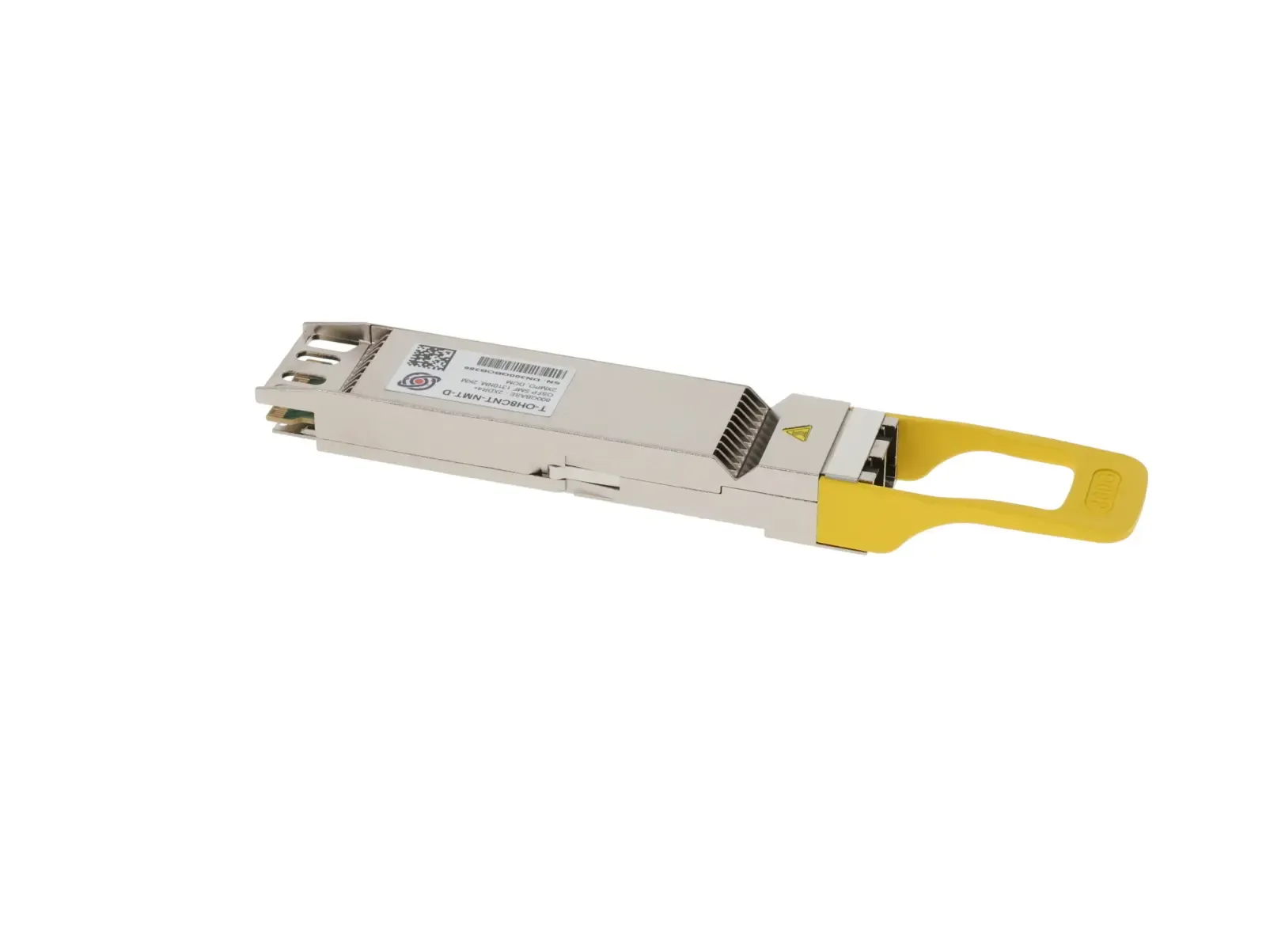
A Riding Heat Sink (RHS) optic is cooled from the host side. The heat sink is part of the host and “rides” on top of the optic to pull heat away, which is why the optic has a flat, lower-profile top (about 9.5 mm, versus about 13 mm for IHS). The host’s heat sink may be air-cooled or sit on a liquid-cooled cold plate. Either way, the more surface area it can touch, the more heat it can pull out.
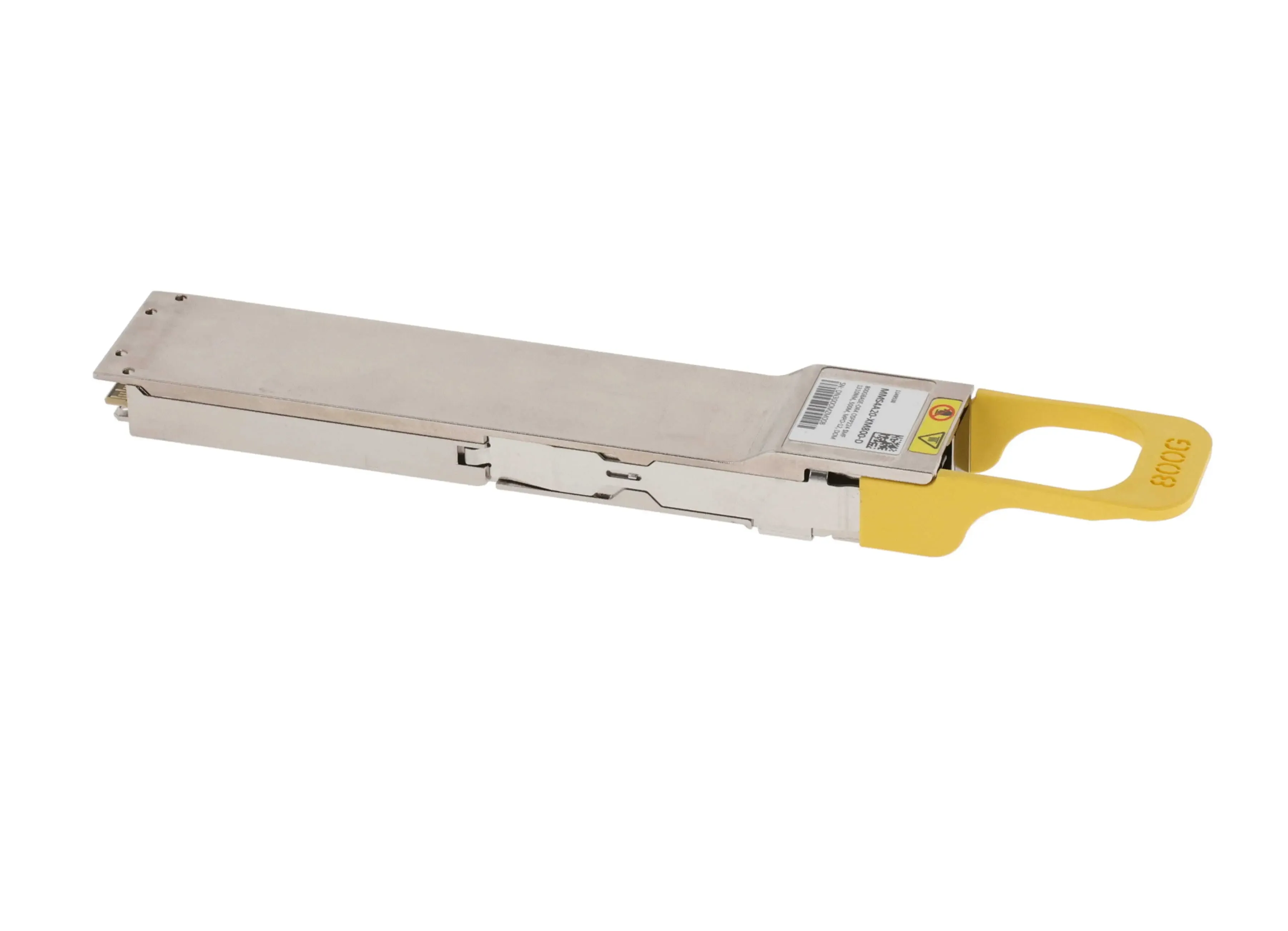
How They Relate
Gearbox requirements and heat sink designs are independent, so an 800G DR4 optic can come in four combinations:
- Gearbox with IHS
- Gearbox with RHS
- Non-gearbox with IHS
- Non-gearbox with RHS
Your host determines which one you need. Its lane speed tells you whether you need a gearbox. Its port design and cooling approach tell you whether you need IHS or RHS. That is why two optics with identical optical specifications may not work in the same host.
Questions to ask any optics supplier
When you talk to a supplier, get specific. The answers define the compatible optic, so there are no surprises at deployment. These same questions carry forward to 1.6T platforms, where 200G electrical lanes and riding heat sinks are becoming more common.
- Lane speed: What electrical lane speed does my host use, and does it need an optic with a gearbox?
- Cooling: How does my host cool the optic: open-top IHS, closed-top IHS, or RHS?
- Part number: Which of the four combinations is this exact part number, and is it stated in the listing?
Where Dromeda stands
At Dromeda Networks, we don’t treat 800G optics as one-size-fits-all. Data rate and optical specifications are the starting point. We also check each module’s electrical lane configuration and heat sink design against the host it’s going into. That is why our product listings state whether a module has a gearbox and whether it is IHS or RHS, so you can match the optic to your switch before it ships.
Not sure what your host requires?
Ask us. We’d rather answer that question before the order than after the install. Talk to our team with your host platform and we will help you match the gearbox and heat sink configuration.
Planning a build or refresh?
The useful conversation right now is about what ships today: compatibility, lead times, and how your optics will be validated in your environment. Talk to our team about what you are planning.
Contact DromedaSources and notes
All trademarks belong to their respective owners. Dromeda Networks is not affiliated with or endorsed by any OEM named or implied.